Facing a hard leather cricket ball flying at over 120 km/h on a windy afternoon in Toronto or Calgary requires absolute confidence in your protective gear. Your leg guards are the only barrier preventing severe bone bruising or fractures. If you are searching for the best cricket batting pads Canada has to offer, you have likely run into a classic dilemma: should you buy ultra-light modern molded foam pads, or stick with traditional, heavy-duty cane rods?
Finding the right balance between lightweight mobility and impact protection can transform your batting performance. In this comprehensive guide, we will break down the structural differences between molded and cane batting pads, evaluate their performance on synthetic and turf pitches across Canada, and help you select the exact gear needed to elevate your game.
The Evolution of Cricket Leg Guards: An Overview
Cricket batting pads have transitioned from heavy, bulky configurations into highly engineered pieces of athletic armor. For decades, the construction of a leg guard relied entirely on vertical cane rods wrapped in canvas and stuffed with cotton padding. While incredibly robust, these traditional designs offered minimal flexibility and added significant weight to a batsman’s legs.
The introduction of High-Density Foam (HDF) and low-profile molded designs changed the landscape. Modern manufacturing techniques allow brands to shape shock-absorbing foams into sleek, lightweight, wrap-around profiles. Today, Canadian cricketers have access to both classic cane builds and futuristic molded styles, each catering to different batting styles, pitch conditions, and personal preferences.
Why Choosing the Right Batting Pad Matters
Selecting the appropriate batting pad directly impacts your confidence at the crease, your running speed between the wickets, and your physical safety.
- Injury Prevention: A high-quality pad absorbs and disperses the kinetic energy of a fast delivery, shielding your shins, knees, and ankles from impact.
- Running Efficiency: Heavy, water-logged, or ill-fitting pads slow down your reflex movements and hinder quick singles.
- Stance and Balance: Modern streamlined designs fit flush against your legs, preventing your bat from getting caught in bulky outer folds during late cuts or flick shots.
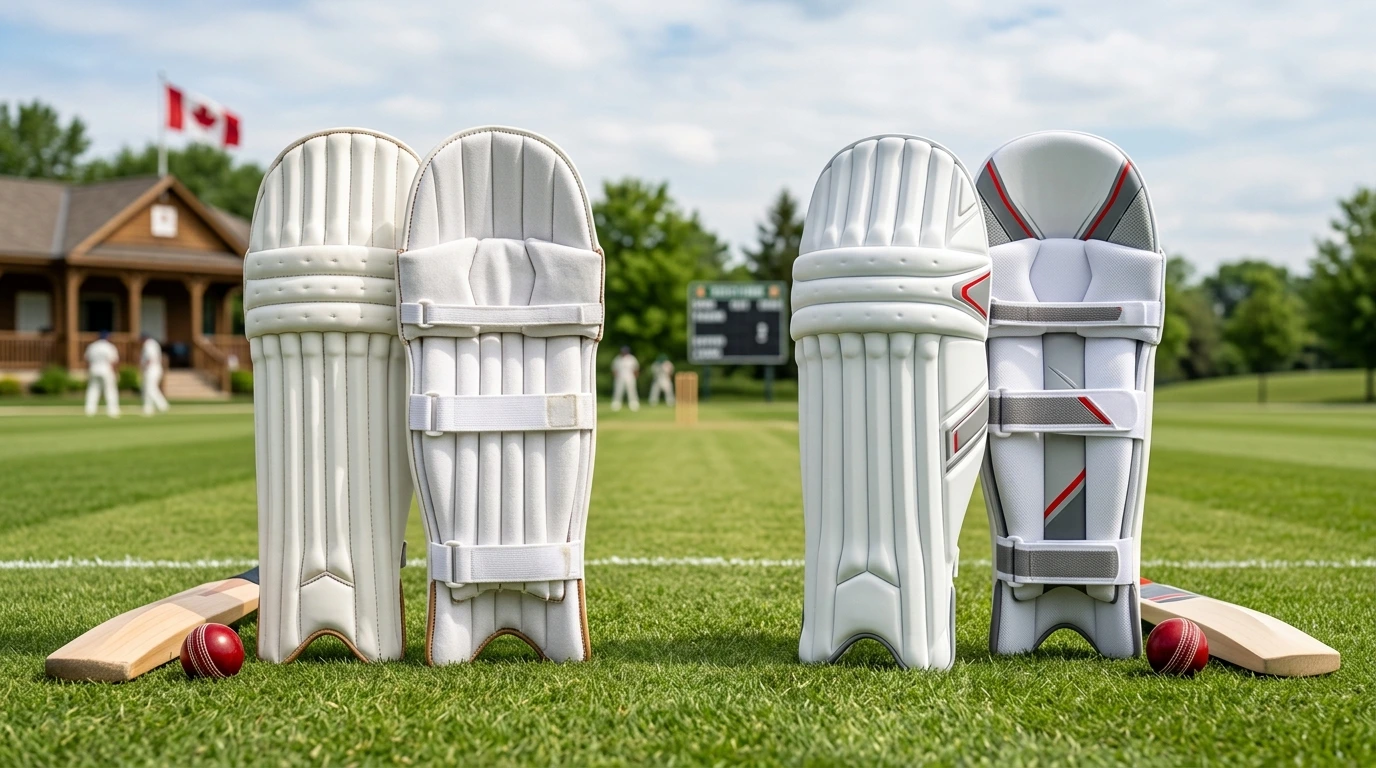
Traditional Cane vs. Modern Molded Batting Pads
To choose the best cricket batting pads Canada players can rely on, you must understand how these two primary styles perform under pressure.
Traditional Cane Batting Pads
Cane pads feature physical vertical bamboo or cane rods stitched into the front face of the pad, backed by layers of low-density or high-density foam sheets.
- Benefits: Exceptional protection against high-velocity impacts. The rigid cane structure acts as a solid shield, absorbing the initial shock before it reaches the foam backing. They also offer a classic aesthetic preferred by traditionalists.
- Drawbacks: They are noticeably heavier than pure foam alternatives. Over long innings or hot summer double-headers, the weight can cause muscle fatigue.
- Best Use Cases: Ideal for top-order batsmen playing long formats on hard turf pitches where fast bowlers generate steep bounce.
Modern Molded Foam Batting Pads
Molded pads are constructed entirely from lightweight High-Density Foam (HDF) or laminated EVA foams shaped into a single, seamless protective piece without internal cane rods.
- Benefits: Incredibly lightweight and form-fitting. They wrap tightly around the contour of the leg, reducing bulk and maximizing running speed.
- Drawbacks: Some lower-end molded pads can suffer from “wrap-around bounce,” where a ball hitting the edge of the pad deflects inward toward the stumps. They can also degrade faster if exposed to extreme sub-zero storage conditions during Canadian winters.
- Best Use Cases: Perfect for T20 specialists, hard-hitting mid-order batsmen, and indoor cricket leagues where speed and agility are paramount.
Key Features to Consider Before Buying
When assessing your options to buy the Shop High-Quality Cricket Batting Pads collection, keep these technical specifications in mind:
1. Face Construction and Materials
Look closely at the outer material. Premium pads utilize high-grade Polyurethane (PU) faces, which are durable, easy to wipe clean after playing on damp outfields, and highly resistant to scuffing. Cheaper PVC models tend to crack over time.
2. Knee Roll Design and Protection
The knee roll is a critical safety component. Premium options feature a reinforced three-piece internal bolster that fits snugly over your knee cap. Look for structures utilizing fiber inserts or thermoplastic polyurethane (TPU) casings behind the foam for advanced patella protection.
3. Straps, Liners, and Comfort Bolsters
Look for wide, padded straps that distribute pressure evenly across your calves and thighs to prevent chafing. Air mesh liners and moisture-wicking internal fabrics are highly beneficial for managing sweat during humid mid-summer matches.
Expert Recommendations for Canadian Conditions
Canadian cricket pitches vary wildly—from professional turf squares in King City to unpredictable concrete-based matting pitches in community parks. This variance requires specific gear setups.
If you are a competitive club cricketer facing premier fast bowlers, investing in top-tier protection is non-negotiable. Leg guards like the ACS Player Edition Leg Guard Batting Pads provide an excellent balance of high-density protection and wrap-around comfort tailored for local conditions.
For left-handed players who often struggle to find elite equipment variations locally, specialized models from heritage brands offer fantastic options. Consider checking out the SS Platino Batting Pads navay blue or the alternative color profile of the SS Platino Batting Pads BLACK to ensure your protective gear matches your team kit while offering top-tier shock absorption. Top brands like SS Cricket continue to set international standards for construction quality, ensuring their gear withstands heavy impact across all formats.
Common Mistakes to Avoid When Buying Batting Pads
- Buying the Wrong Size: A pad that is too large will restrict your movement and push against your thigh guard when you bend your knees. A pad that is too small leaves your vulnerable lower kneecap or upper ankle exposed to devastating impacts.
- Ignoring Ambidextrous vs. Side-Specific Designs: Right-handed and left-handed pads have specific side-wings designed to protect the vulnerable outer leg facing the bowler. Buying a mismatched pad leaves your lead leg completely exposed.
- Prioritizing Weight Over Safety: While ultra-light pads feel amazing in the store, using cheap, unreinforced foam models against a high-quality leather ball can lead to severe injuries. Ensure your pads match the bowling speeds you regularly face.
Comparison: Molded Foam vs. Traditional Cane Pads
| Feature | Traditional Cane Pads | Modern Molded Foam Pads |
| Primary Material | Natural Cane Rods + Foam Layering | High-Density Polyurethane / EVA Foam |
| Average Weight (Per Pair) | 1.6 kg – 1.9 kg | 1.1 kg – 1.4 kg |
| Impact Absorption | Elite (Spreads heavy impact across rods) | High (Absorbs shock directly via dense cells) |
| Profile & Fit | Bulkier, flat traditional face | Sleek, curved, ergonomic wrap-around |
| Best Pitch Suitability | True Turf, High Bounce Pitches | Matting, Concrete, Indoor AstroTurf |
| Durability Profile | Highly durable; retains shape for years | Flexes well; foam can soften over extended use |
Frequently Asked Questions
How do I measure my correct cricket batting pad size?
Measure from the center of your kneecap down to the instep of your foot (where your foot meets your ankle). Match this length against the manufacturer’s size chart. The top knee roll should sit directly over your knee joint when standing in your batting stance.
What is the difference between Test match quality and club quality pads?
Test match quality pads use premium high-density cane, thicker shock-absorbing foam, and internal composite fiber shields to withstand ball speeds exceeding 140 km/h. Club pads utilize lighter densities of foam and plastic inserts suitable for lower intermediate bowling speeds.
Can I wash my cricket batting pads?
Do not submerge your pads in water. Clean the outer PU or PVC face by wiping it down with a damp cloth and mild soap. For the internal fabric mesh linings, use an anti-bacterial spray and allow them to air-dry completely in a shaded, well-ventilated space.
Are colored batting pads allowed under ICC regulations?
Yes, colored batting pads are fully permitted and standard practice in limited-overs cricket formats. For international regulations and official apparel updates, check the guidelines published by the International Cricket Council (ICC).
How often should I replace my leg guards?
Replace your pads immediately if the internal cane breaks, the protective outer shell cracks open exposing raw foam, or if the internal straps lose their elasticity completely. On average, an active club cricketer replaces their pads every two to three seasons.
Final Thoughts
Finding the best cricket batting pads Canada has available comes down to aligning your equipment with your personal playing style and competitive environment. If you want maximum agility, rapid running speeds, and a sleek modern profile, lightweight molded foam pads are an excellent choice. If you play on bouncy turf pitches against high-pace bowling and want time-tested shock absorption, traditional cane protection remains the gold standard.
Never compromise on your safety at the crease. If you need personalized assistance choosing the perfect size, design, or brand for your unique requirements, feel free to visit our storefront or Contact Us directly at +1 780-222-3222. Gear up correctly, step into your crease with confidence, and make this cricket season your most successful one yet!